- Home Page /
- Books /
- Computers & Technology /
- Computer Science /
- AI & Machine Learning /
- Intelligence & Semantics /
- Mind Children: The Future of Robot and Human ...



Item #:
12128556
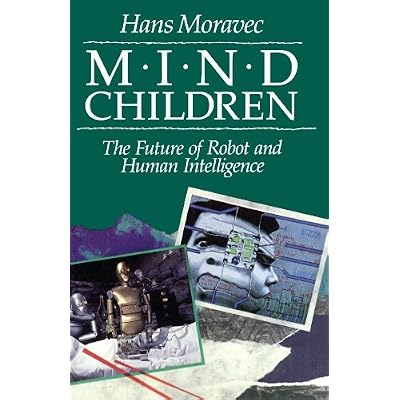
Mind Children: The Future of Robot and Human Intelligence Paperback January 2, 1990
Item #:
12128556
€ 27
Price Details
Excluding Shipping & Custom charges ( Shipping and custom charges will be calculated on checkout )
*All items will import from US
44%
In stock
 Imported from USA store
QTY:
Order now and get it around Wednesday, June 24
Secured transaction
Ubuy works hard to protect your security and privacy. Our advanced payment security system ensures confidentiality by encrypting your information during transmission using AES (Advanced Encryption Standards) and SSL (Secure Socket Layer) protocols. Your payment details are 100% secure as we do not share your payment details with third party sellers.
Our Top Logistics Partners


Mind Children, written by an internationally renowned roboticist, offers a mind-boggling glimpse of a world we may soon share with our artificial progeny.

Buy Now Pay Later

Fast
Shipping

Free
Return*

Secure Packaging

100% Original Products

PCI DSS Compliance

ISO 27001 Certified


Note: Step Down Voltage Transformer required for using electronics products of US store (110-120). Recommended power converters Buy Now.


What Stands Out
Robust Insight
Provides deep analysis of AI evolution, blending human and robotic intellect, offering readers a thought-provoking perspective on future advancements and challenges in technology.
Historical Context
Explores the origins and development of artificial intelligence, helping readers understand the foundational concepts that shape today's technological landscape and future innovations.
Interdisciplinary Approach
Integrates insights from philosophy, science, and technology, enriching the reader's understanding of the implications of AI on humanity, thus appealing to a broad audience interested in interdisciplinary studies.
Product Details
- Imagine attending a lecture at the turn of the twentieth century in which Orville Wright speculates about the future of transportation, or one in which Alexander Graham Bell envisages satellite communications and global data banks. Mind Children, written by an internationally renowned roboticist, offers a comparable experience―a mind-boggling glimpse of a world we may soon share with our artificial progeny. Filled with fresh ideas and insights, this book is one of the most engaging and controversial visions of the future ever written by a serious scholar.Hans Moravec convincingly argues that we are approaching a watershed in the history of life―a time when the boundaries between biological and postbiological intelligence will begin to dissolve. Within forty years, Moravec believes, we will achieve human equivalence in our machines, not only in their capacity to reason but also in their ability to perceive, interact with, and change their complex environment. The critical factor is mobility. A computer rooted to one place is doomed to static iterations, whereas a machine on the prowl, like a mobile organism, must evolve a richer fund of knowledge about an ever-changing world upon which to base its actions.In order to achieve anything near human equivalence, robots will need, at the least, the capacity to perform ten trillion calculations per second. Given the trillion-fold increase in computational power since the end of the nineteenth century, and the promise of exotic technologies far surpassing the now-familiar lasers and even superconductors, Moravec concludes that our hardware will have no trouble meeting this forty-year timetable.But human equivalence is just the beginning, not an upper bound. Once the tireless thinking capacity of robots is directed to the problem of their own improvement and reproduction, even the sky will not limit their voracious exploration of the universe. In the concluding chapters Moravec challenges us to imagine with him the possibilities and pitfalls of such a scenario. Rather than warning us of takeover by robots, the author invites us, as we approach the end of this millennium, to speculate about a plausible, wonderful postbiological future and the ways in which our minds might participate in its unfolding.
| Publisher | Harvard University Press |
| Publication date | January 2, 1990 |
| Edition | Reprint |
| Language | English |
| Print length | 224 pages |
| ISBN-10 | 0674576187 |
| ISBN-13 | 978-0674576186 |
| Item Weight | 13.6 ounces (385.56 grams) |
| Dimensions | 6 x 0.56 x 9.25 inches (15.2 x 1.4 x 23.5 cm) |
Who Should Buy?

-
Technology Enthusiasts
Individuals fascinated by advancements in AI and robotics will appreciate the insights on future developments.
-
Students of AI
Students pursuing studies in artificial intelligence and cognitive science can benefit from foundational concepts explored in the book.
-
Philosophy Buffs
Readers interested in the ethical implications of technology and human evolution will find the philosophical discussions engaging.

-
General Readers
Casual readers may find the technical jargon and concepts challenging without a strong background in AI.
-
Non-Technical Audiences
Those without a technical background may struggle to grasp the advanced theories and discussions presented in the book.
-
Immediate Solutions Seekers
Readers looking for practical, immediate applications of AI will likely be disappointed by the book's speculative nature.
Product Description
Have any Query? Chat with us
Customer Questions & Answers
-
Question:
What is the central theme of Mind Children: The Future of Robot and Human Intelligence?
Answer: The central theme of 'Mind Children' revolves around the interplay between human intelligence and artificial intelligence. The book explores the potential future where robots and humans coexist and interact on a deeper cognitive level. It discusses how advancements in technology will enhance human capabilities and vice versa, offering insights into ethical concerns, societal implications, and the transformative impact of AI on daily life. This theme is especially relevant for individuals interested in technology’s evolution and its integration into personal and professional environments. -
Question:
Who is the author of Mind Children and what is his background?
Answer: The author of 'Mind Children' is Hans Moravec, a renowned figure in the field of robotics and artificial intelligence. His background includes extensive research at the Carnegie Mellon University, where he has contributed significantly to the studies of robot perception and learning. Understanding the author’s expertise offers readers a comprehensive perspective on the topics discussed in the book, including cognitive technology and future scenarios of human-robot interaction. This background adds credibility to the innovative ideas presented in the book, making it a valuable read for enthusiasts and professionals alike. -
Question:
What are some key concepts discussed in the book?
Answer: Key concepts in 'Mind Children' include the evolution of artificial intelligence, the potential merging of human and machine intelligence, and the philosophical implications of these developments. Moravec discusses cognitive robotics, exploring how robots can mimic human thought processes and decision-making. These concepts are critical for those looking to understand the future landscape of technology and its ethical implications. Readers will find scenarios that reflect real-world applications, from AI in healthcare to advancements in personal assistant technologies. -
Question:
How does Mind Children predict the future of AI in human society?
Answer: Mind Children predicts a future where artificial intelligence not only complements human intelligence but also challenges it, leading to a redefinition of societal roles. Moravec envisions a world where machines aid in complex decision-making, potentially changing work dynamics and personal interactions. This perspective is particularly intriguing for professionals in technology and education, as it prompts discussions on adapting to shifts in employment, learning methodologies, and daily life. Such insights serve as a foundation for understanding how to prepare for and navigate the implications of rapid technological advancements. -
Question:
Is Mind Children accessible for someone not well-versed in AI?
Answer: Yes, 'Mind Children' is written in a manner that makes it accessible to a broader audience, including those who may not have a technical background in artificial intelligence. Moravec uses clear language and relatable examples to explain complex ideas. This makes the book an excellent choice for readers who wish to expand their knowledge of AI and its impact without needing extensive prior knowledge. It serves both as an introduction and a thought-provoking exploration for anyone curious about the future of technology. -
Question:
What kind of research backs the assertions made in Mind Children?
Answer: The assertions in 'Mind Children' are backed by extensive research in the fields of robotics, cognitive science, and artificial intelligence. Moravec draws upon both theoretical frameworks and practical experiments to illustrate his points, making the discussions credible and informed. This robust research foundation is beneficial for academics, tech enthusiasts, and policymakers who seek to understand the scientific principles underlying the evolution of AI. The book thus acts as both a scholarly resource and a thought leader in the discourse surrounding future technology. -
Question:
What audience would benefit the most from reading Mind Children?
Answer: Various audiences can benefit from 'Mind Children', including technology professionals, students, and policymakers. Those working in AI development will find it insightful as it evaluates future trends and ethical considerations. Similarly, students studying robotics or cognitive science may gain a deeper understanding of their field through real-world implications discussed in the book. Additionally, policymakers can use the insights to inform decisions about regulations and practices regarding AI’s integration into society. Overall, the book invites diverse perspectives on the future of human and machine interactions. -
Question:
How does Mind Children address ethical concerns regarding AI?
Answer: Mind Children tackles ethical concerns related to artificial intelligence by exploring the responsibility of creating intelligent machines and the societal implications of their integration. Moravec raises questions about autonomy, decision-making, and the potential for bias in AI systems. This discussion is vital for readers who wish to consider the moral dimensions of technological advancements, especially in fields like healthcare and law. By reflecting on these ethical challenges, the book encourages readers to think critically about the responsibilities that come with creating increasingly autonomous systems. -
Question:
What practical applications of AI are mentioned in Mind Children?
Answer: In 'Mind Children', several practical applications of AI are discussed, ranging from advancements in robotics to enhancements in everyday technologies. Real-world scenarios include the use of AI in healthcare for diagnosis and treatment planning, as well as in education for personalized learning experiences. These applications highlight the transformative nature of AI and its potential to improve efficiency and outcomes in various sectors. Understanding these applications helps readers appreciate the immediate and long-term benefits of integrating AI into everyday life and professional practices. -
Question:
Where can I buy Mind Children: The Future of Robot and Human Intelligence?
Answer: You can buy 'Mind Children: The Future of Robot and Human Intelligence' from Ubuy in Finland. Ubuy offers a range of products, including books on advanced technology and artificial intelligence, making it a reliable choice for those interested in this compelling subject. Shopping through Ubuy provides a convenient experience with an extensive collection of items related to tech and innovation, ensuring you can find the literature that best suits your interests.
Intelligence & Semantics Editorial Review
Mind Children: The Future of Robot and Human Intelligence is a book that was written 30 years ago and deals with topics that have rapidly evolved since then. While it may provide insights into what computer scientists thought about AI in the late 80s, the information in the book is considered outdated and no longer relevant. The first three chapters, in particular, demonstrate the author's optimism about the future of technology but have not come to fruition. For a more timely and informative read on the subject, it is recommended to skip this book and instead consider 'Life 3.0'. However, chapters 4 to 6 offer a fascinating look at the potential features of a transhuman world.
Customer Reviews & Ratings
36 customers ratings
-
5 Star
56%
-
4 Star
17%
-
3 Star
10%
-
2 Star
11%
-
1 Star
6%
Review this product
Share your thoughts with other customers
Pros
- Chapters 4 to 6 provide thought-provoking insights into a transhuman future
- Easy and enjoyable to read, comparable to novels
- Offers a vision of the future that was ahead of its time
Cons
- Outdated and no longer relevant information
Product Price History
Important information
- Limitations : For products shipped internationally, please note that any manufacturer warranty may not be valid; manufacturer service options may not be available; product manuals, instructions, and safety warnings may not be in destination country languages; the products (and accompanying materials) may not be designed in accordance with destination country standards, specifications, and labeling requirements; and the products may not conform to destination country voltage and other electrical standards (requiring use of an adapter or converter if appropriate). The recipient is responsible for assuring that the product can be lawfully imported to the destination country. When ordering from Ubuy or its affiliates, the recipient is the importer of record and must comply with all laws and regulations of the destination country.
- Not all the products listed on Ubuy are for sale, as Ubuy is a global search engine. Products are subject to export/trade regulations.
€ 27
Order now and get it around Wednesday, June 24
This item is not restrict in my country.(Please click on above link if this item is not restrict in your country, So our team will review and allow.)
QTY:
Secured transaction
Ubuy works hard to protect your security and privacy. Our advanced payment security system ensures confidentiality by encrypting your information during transmission using AES (Advanced Encryption Standards) and SSL (Secure Socket Layer) protocols. Your payment details are 100% secure as we do not share your payment details with third party sellers.
Our Top Logistics Partners
Fastest cross-border delivery
Features & Benefits
- Mind Children offers a mind-boggling glimpse of a future shared with artificial progeny
- Argues that we are approaching a watershed in the history of life
- Believes we will achieve human equivalence in machines within 40 years
- Robots will need the capacity to perform ten trillion calculations per second
- Speculates on the possibilities and pitfalls of a postbiological future
- Invites speculation about the ways in which our minds might participate in this future